Electrolyte –
And
Leak Testing
for your Battery
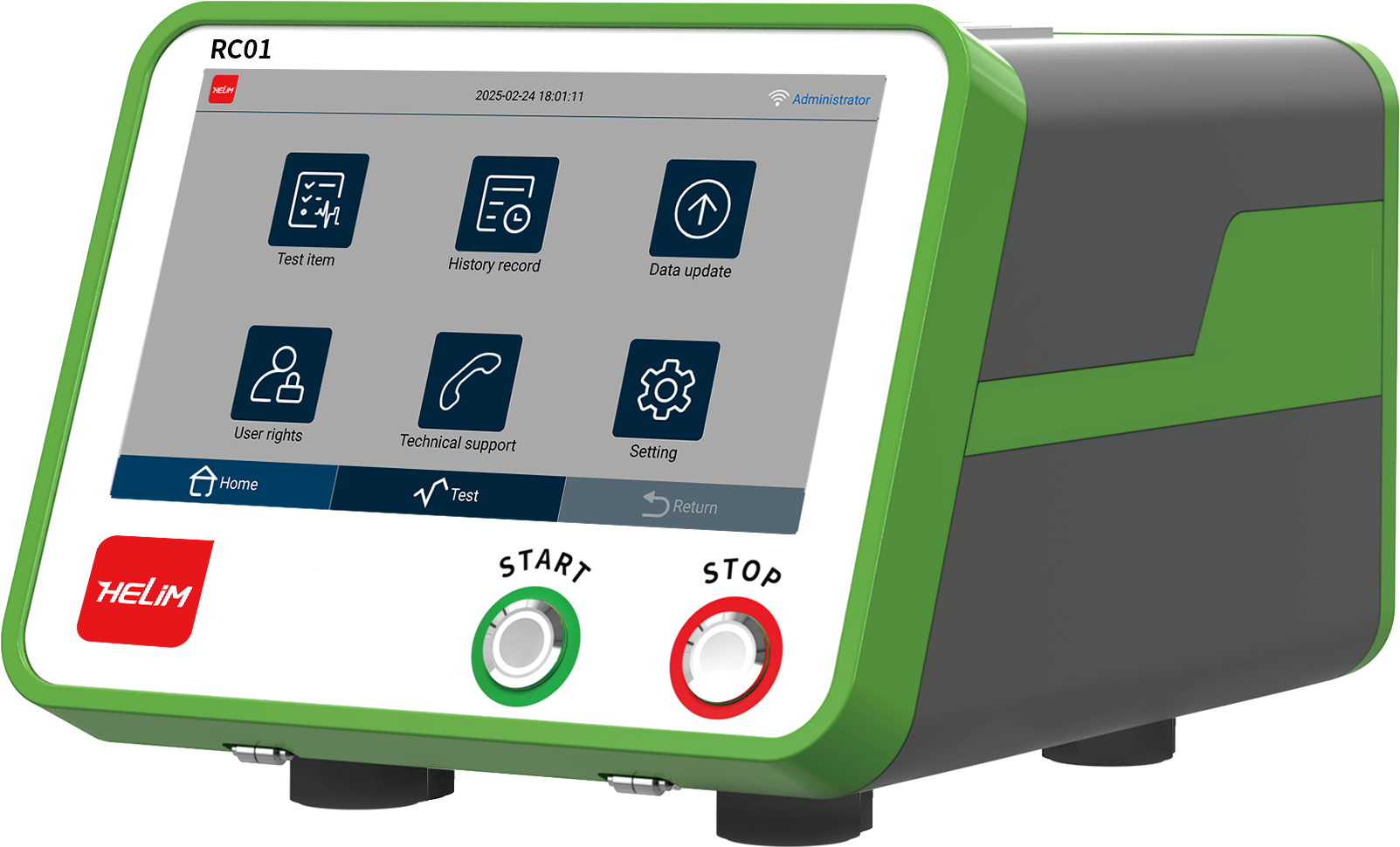

For HV-EV Battery Aftersales Service, Repair Workshops, and Battery Packs in Production
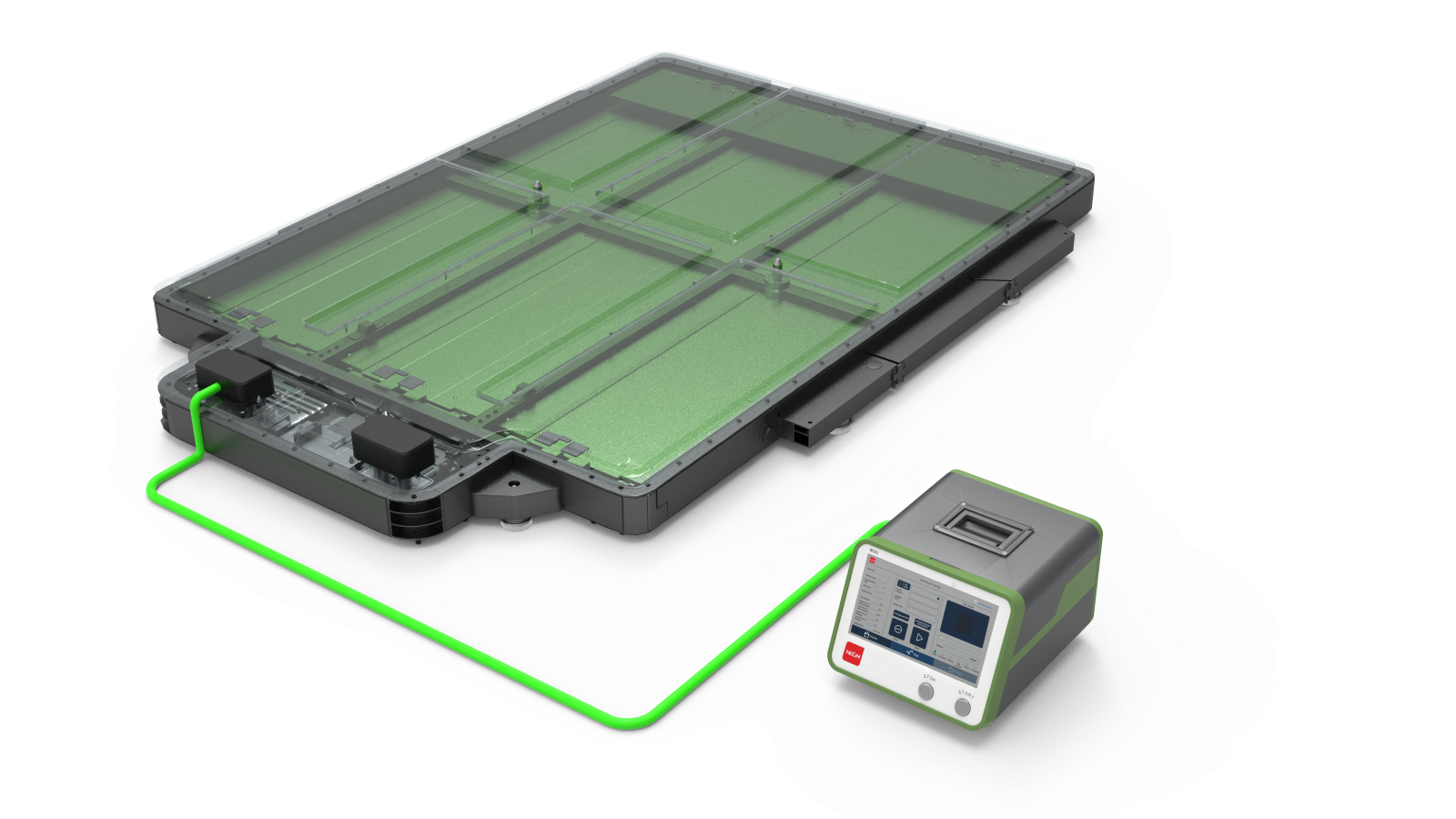
The RC01-E Battery Electrolyte Leak Tester is connected to the fully sealed high-voltage battery. With its integrated vacuum pump, the device extracts air from the battery housing and analyzes it for the concentration of electrolyte vapors (in ppm).
The permissible threshold can be configured according to OEM specifications.
The result is clearly displayed as PASS or FAIL:
The test duration is usually 10–30 seconds, depending on the internal volume of the battery.
The RC01-E is also designed for quality assurance in battery manufacturing.
During the laser welding of battery cells and contact plates, invisible micro-cracks can occur in the cell housing. If a weld overheats or burns through, electrolyte can escape – leading to the following problems:
To detect such defects early, the battery module or battery pack is placed in an airtight test chamber (standard volume approx. 10 L) and connected to the RC01-E.
The device creates a vacuum and analyzes the extracted air for traces of electrolyte vapors – thus, leaks can be detected quickly and reliably before the product reaches the next manufacturing step or is delivered.
Larger chambers or customized process parameters can be configured upon request.
After completion of repair work, a post-check for electrolyte leaks can be performed with the RC01-E to validate the repair.
In addition, the device features two pressure-based leak tests:
All test results are automatically stored in an integrated database, enabling:
This ensures that every serviced battery meets the specified safety, reliability, and performance standards before being put back into operation.
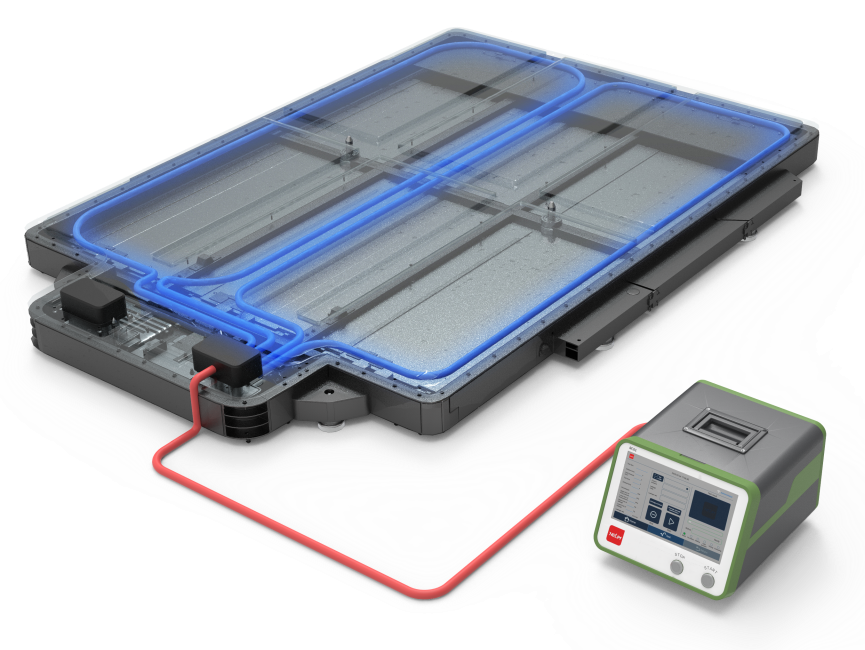
After reassembling a high-voltage battery, the housing must be checked for leaks. A low-pressure test is carried out using a leak tester. The targeted introduction of air is used to check whether the housing is completely sealed. This ensures that no moisture or harmful gases penetrate the battery. A reliable leak tester is important to ensure the long-term safety and function of the battery.

After repairing a high-voltage battery, the cooling circuit must be checked for leaks. To do this, a high-pressure test with air is carried out using a leak tester. This allows even the smallest leaks to be reliably detected and repaired. It is particularly important that no cooling medium escapes from the system, as otherwise cooling water can get into the battery cells and cause damage. This test ensures that the cooling system is working properly and that the battery does not overheat. A leak tester helps to check the quality of the repair and protect the service life of the battery.
| Application Area | Purpose | Benefits |
| HV-EV Battery Aftersales & Repair Workshops | Safe assessment of sealed batteries before opening; verification after repair | Increased safety for technicians, minimized risk, validated repair quality |
| Battery Production & Pack Assembly | Inline or End-of-Line Leak and Electrolyte Detection | Less rework, higher production yield, reliable quality control |
The RC01-E is thus a dual-function solution:
✔ Battery electrolyte tester for EV repair and workshop safety
✔ HV-EV battery leak tester for production and assembly quality assurance
High-pressure test for the battery cooling system
Low-pressure testing of the battery housing
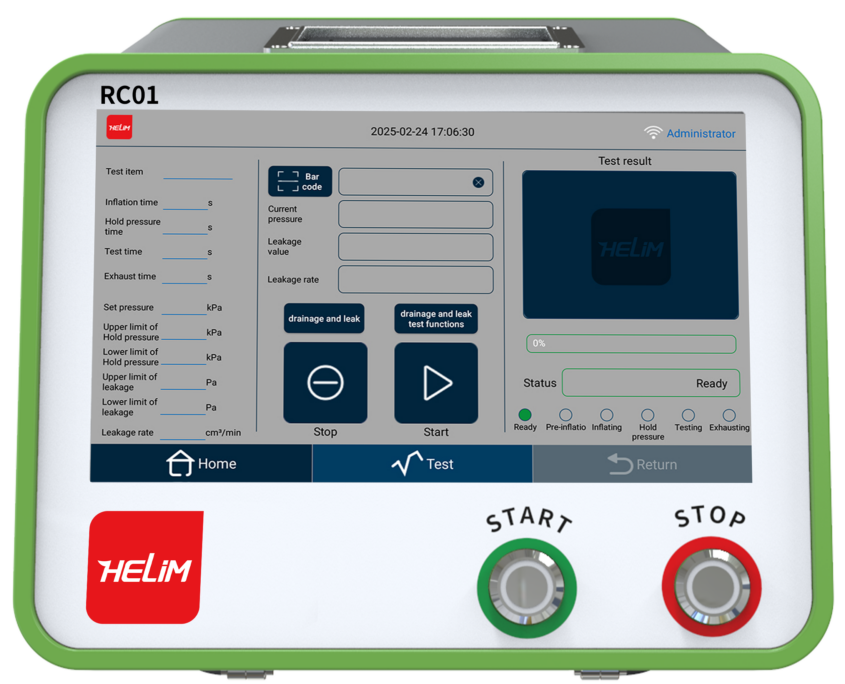
10.1″ touchscreen for intuitive
operation
Android 4.4.2 – easy operation
Storage capacity for up to 10,000 test results, exportable via USB.
Up to 1,000 customizable test programs.
Integration of a barcode scanner for efficient workflows
Test history
Optimized for use in the workshop
Practical carrying handle
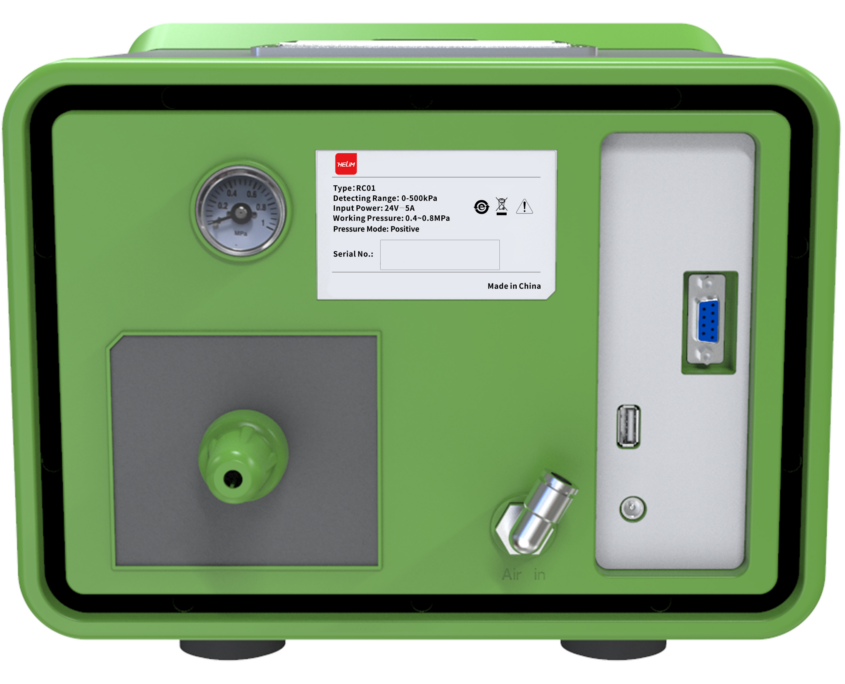
External pressure display
USB port for data and barcode scanner
RS232 Port
Compressed air Port
Integrated air filtration and oil separator
Test Port
Robust aluminum housing for long-term use
Automatic pressure regulation
Power connection
Modern electric vehicles (EVs) rely on powerful high-voltage batteries (HV batteries). To ensure the safety, performance, and lifespan of these energy storage units, precise air leak and electrolyte testing after maintenance, repair, or in battery production is indispensable.
Our HV Battery Leak and Electrolyte Tester was specially developed for workshops, aftersales services, and production lines. The device enables fast, safe, and documented inspection of battery modules and packs.
High-voltage batteries are sensitive to moisture, pressure differences, and chemical changes.
Even the smallest leaks can lead to corrosion, performance loss, or safety-critical defects.
Furthermore, leaked electrolyte can pose significant health and fire risks and indicate internal cell damage.
Reliable testing ensures that:
the safety of technicians and workshop personnel is ensured
Defects are detected early
the battery meets OEM and quality requirements
the lifespan and performance of the battery are maintained
Fast tests: test duration of 10–30 seconds depending on battery volume
High sensitivity: detects even the smallest leaks and electrolyte vapors
Two test modes for leak testing:
Low-pressure test for housing tightness
High-pressure test for cooling systems and cooling plates
Electrolyte detection: measures electrolyte vapors in ppm for safe assessment before opening
Easy handling: intuitive operation for workshop and production teams
Documentation: all test results are automatically saved, for quality records and audit requirements
Workshops & Aftersales
After every maintenance or repair of HV batteries, testing ensures complete tightness and early detection of potential defects.
Battery Production & Pack Assembly
During manufacturing, micro-cracks or welding defects can occur. With air leak and electrolyte testing, leaks are detected before delivery, reducing rework and production loss.
Research & Quality Assurance
For laboratories and test centers, the tester provides precise measurements that meet safety standards and OEM requirements.
The combined air leak and electrolyte testing is a crucial step for the safety, quality, and longevity of electric vehicle batteries.
Whether in the workshop, aftersales service, or production – with our HV Battery Leak and Electrolyte Tester, leaks are reliably detected and potential damage is prevented.
Contact us to receive further information or discuss a customized offer for your company.